Sand Point Well Installation in Preston ID
A sand point well - also called a shallow well - is one of the most practical and cost-effective ways to get water access on a property. Not every situation calls for a deep drilled well, and knowing the difference matters. In the right soil and water table conditions, a sand point well gets the job done at a fraction of the cost.
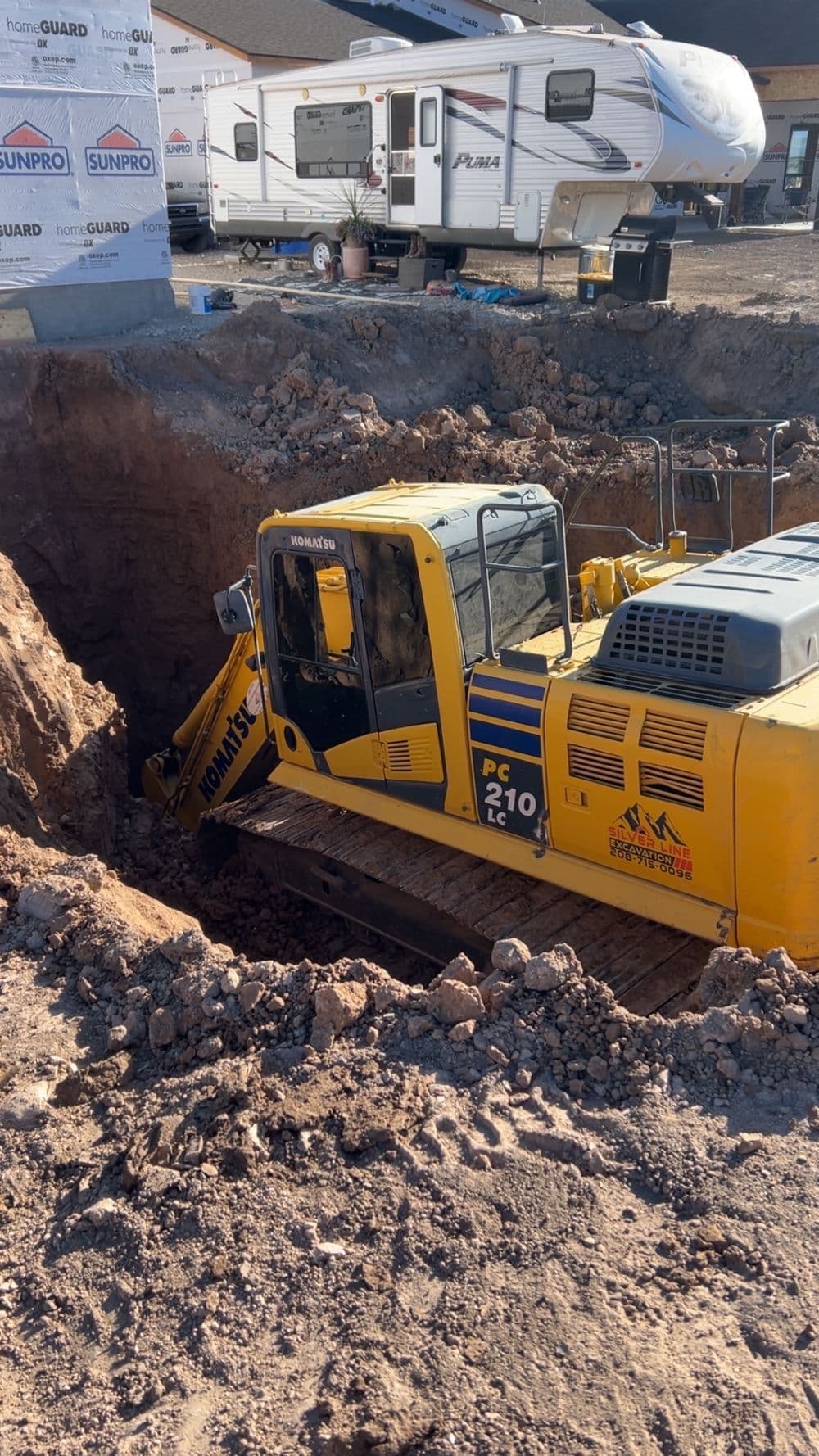
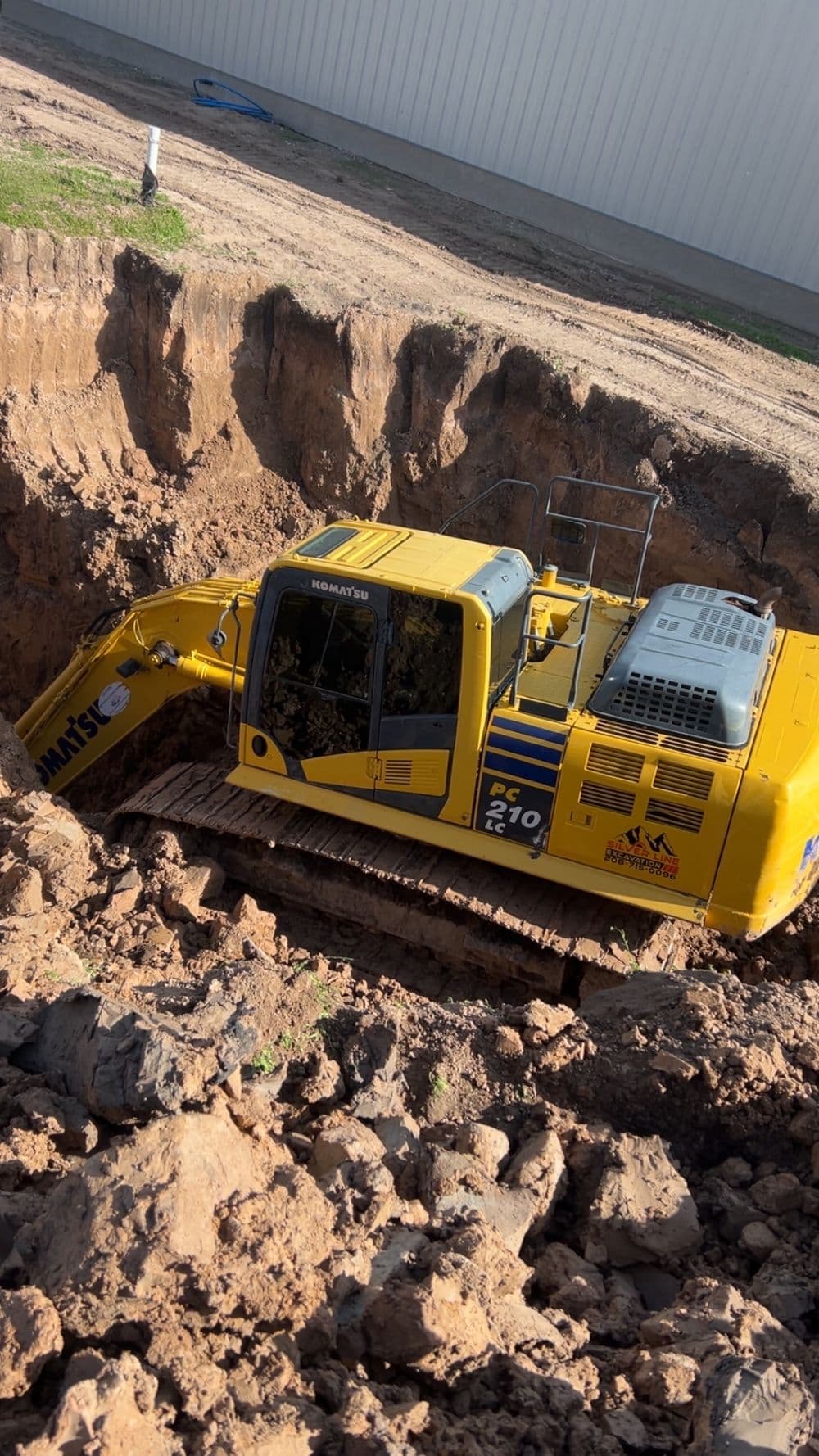
Here's what we were working with on this one. The excavation went deep enough to expose the layers below, and you can see the mix of rocky, compacted soil that's pretty common in this part of Preston. Our Komatsu PC 210 LC handled it without issue - that machine is built for exactly this kind of rocky, unforgiving ground.
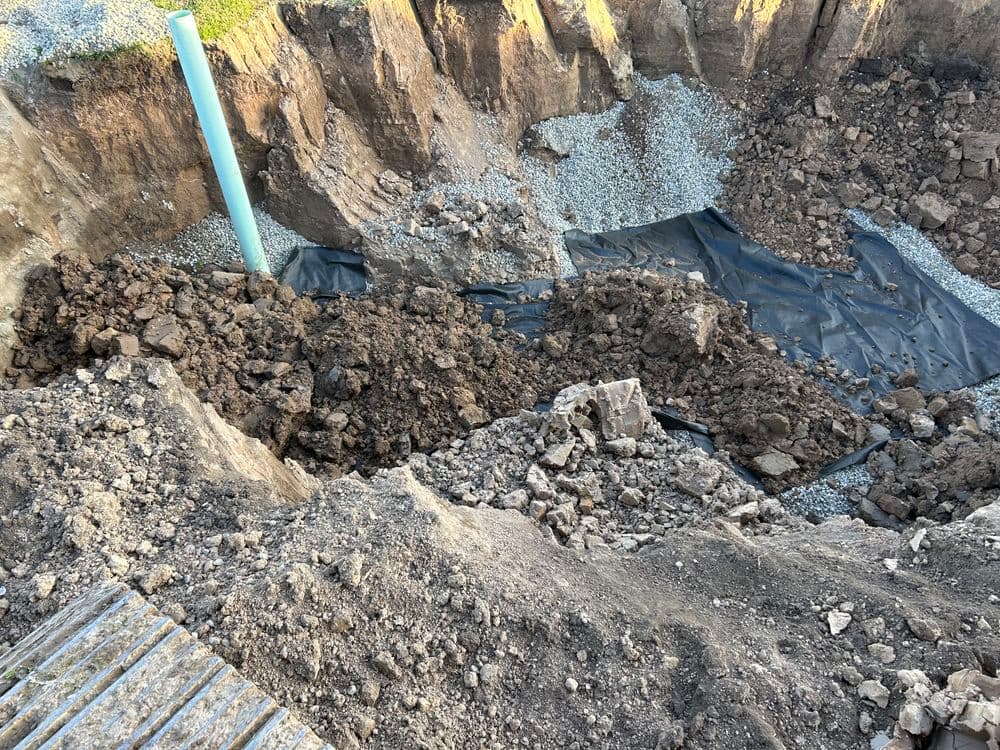
Once we got down to depth, the pit was lined with filter fabric and packed gravel - that's the white crushed stone you see layered in. That gravel pack is critical. It acts as a natural filter around the well point, keeping sediment out and letting clean groundwater flow in freely. The pipe you see standing vertical is the well casing, set and ready to go.
A lot of people don't realize how much prep work goes into a shallow well before a single drop of water moves through it. The excavation has to be precise, the gravel pack has to be right, and the casing has to be seated properly. Skip any of those steps and you end up with a well that underperforms or fails early. We don't cut corners on any of it.
Whether you're on a new build, an agricultural property, or just need a secondary water source, a sand point well can be a smart option depending on your land. We work across the Preston area and know this ground well - literally. If you've been wondering whether a shallow well makes sense for your situation, it's worth having the conversation.