Raised Floor Concrete Foundation Build in Preston ID
This one was new territory for us. A raised floor concrete foundation system - something we hadn't tackled before - and it came with its own set of requirements that you don't run into on a standard slab pour.
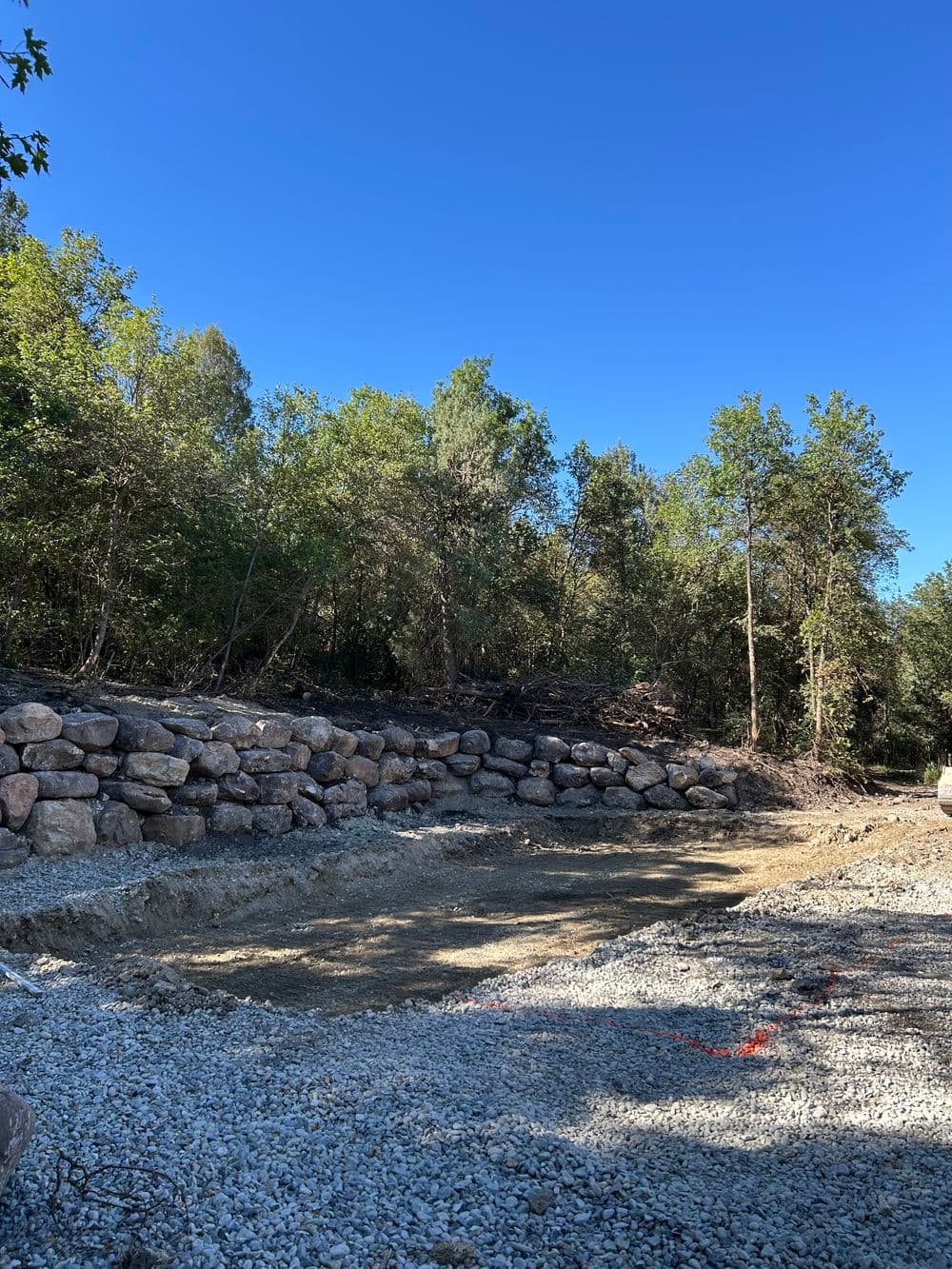
Here's what the process actually looked like. First, the entire area had to be dug out flat. The site had to be level and clean before anything else could happen. Once that was done, we brought in a full foot of 1/4 inch pea gravel across the whole footprint. That layer is doing important work - it creates a drainage path underneath the home so moisture doesn't sit and build up below the floor system over time.
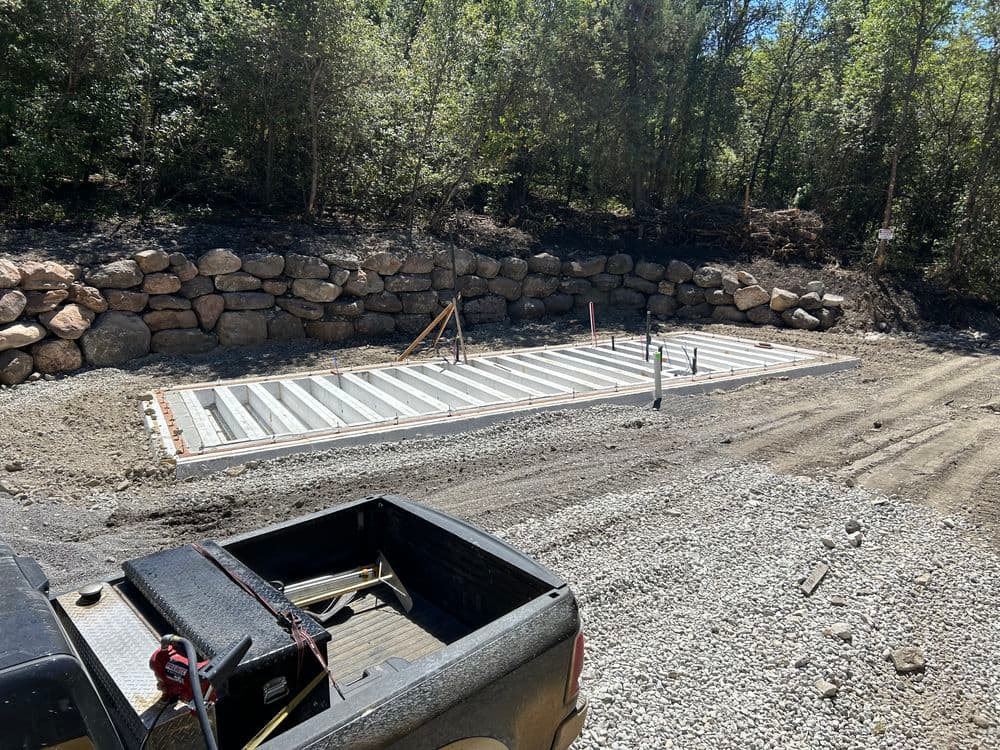
The raised floor system itself sits on top of all that prep work. You can see the steel framing components set inside the concrete perimeter, evenly spaced and ready to carry the load of the structure above. The perimeter walls are poured and solid, and the whole thing is squared up tight against a natural rock retaining wall that runs along the back of the site.
What we liked about this job is that it forced us to do our homework. Every foundation type has its quirks, and a raised floor system like this has to be done right from the ground up - literally. If the drainage isn't there, moisture becomes a long-term problem. If the base isn't flat, nothing above it will be right either. Getting those two things dialed in first is what makes everything else work.
Out here in the Preston, Idaho area, sites like this - tucked into hillsides with rock walls and natural drainage challenges - aren't uncommon. That's exactly why it matters to work with a crew that takes the prep work seriously, not just the stuff you can see when the build is finished.